

Key Takeaways
- Two-factor authentication significantly reduces the risk of unauthorized account access.
- Authentication apps generate more secure codes than SMS text messages.
- Phishing attacks and SIM-swapping can defeat common 2FA methods.
- Hardware security keys offer the strongest protection currently available to consumers.
- Enabling any 2FA method is still far better than using a password alone.
Two-Factor Authentication (2FA)
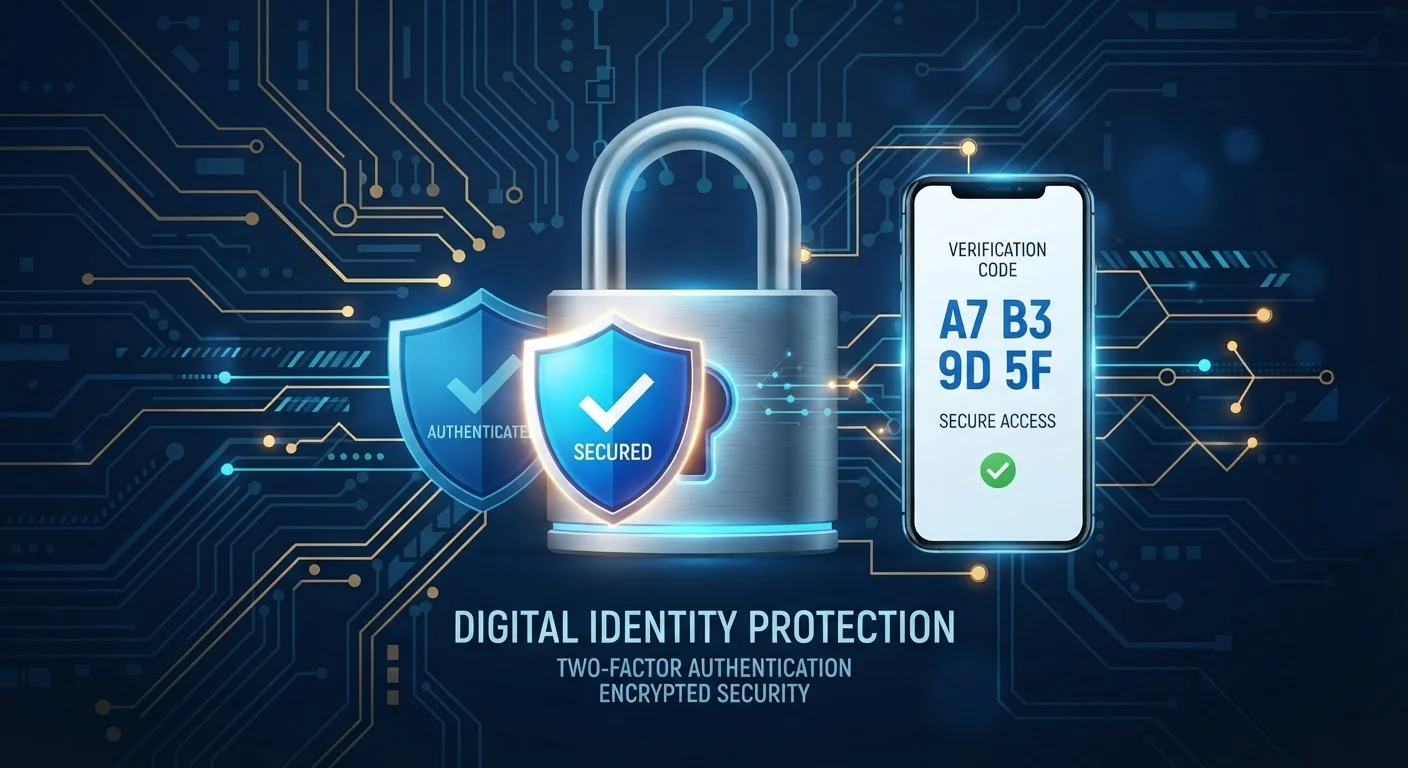
Two-factor authentication is a login security method that requires you to verify your identity in two separate ways before gaining access to an account. Instead of relying on a password alone, it adds a second step - such as a one-time code sent to your phone or generated by an app. The idea is that even if someone steals your password, they still can't get in without that second piece of proof.
In security terminology, 2FA combines two of three factor categories: something you know (password), something you have (a device or token), or something you are (biometric data). Most consumer 2FA uses the first two.
How Two-Factor Authentication Works
When you log in to an account protected by two-factor authentication, the process breaks into two distinct stages. First, you enter your username and password as usual. If those credentials are correct, the service then requires a second form of verification before granting access.
That second factor typically takes one of three forms:
- SMS codes: A one-time numeric code is texted to your registered phone number.
- Authenticator apps: An app like Google Authenticator or Authy generates a time-sensitive code locally on your device, refreshing every 30 seconds.
- Hardware security keys: A physical device you plug in or tap against your phone confirms your identity using cryptography.
The underlying logic is straightforward: a stolen password alone is not enough to break in. An attacker would also need physical or digital access to your second factor - a much higher bar to clear.
99.9%
Of automated account attacks blocked by MFA
Microsoft's security team has reported that multi-factor authentication blocks the overwhelming majority of automated credential-stuffing and password-spray attacks.
~2,000
SIM-swapping complaints per month (US)
The FBI's Internet Crime Complaint Center has documented thousands of SIM-swapping complaints annually in the United States, highlighting the real-world prevalence of this 2FA bypass technique.
Where Two-Factor Authentication Falls Short
2FA improves security meaningfully, but it is not an impenetrable barrier. Understanding the gaps helps you make smarter choices.
Real-Time Phishing Attacks
A convincing fake website can capture your password and your one-time code simultaneously, passing them to the real site before the code expires. The attacker logs in before you even realize anything went wrong. This is sometimes called an adversary-in-the-middle attack.
SIM-Swapping
Criminals have successfully impersonated account holders to mobile carriers, convincing them to transfer a target's phone number to an attacker-controlled SIM card. Once the number is redirected, any SMS-based verification codes go directly to the attacker. This is one reason security experts consistently recommend moving away from SMS-based 2FA where alternatives exist.
Malware on Your Device
If your device is already compromised by malware, an attacker may be able to read codes generated on that device or intercept session tokens after a successful login. 2FA cannot compensate for a device that is already infected - which is why broader security habits matter alongside it. See our home network security guide for foundational practices that reduce device compromise risk.
Switch Away From SMS When You Can
If a service offers an authenticator app or hardware key as an alternative to SMS codes, use it. Authentication apps work even without a cell signal, don't rely on your carrier's security practices, and are not vulnerable to SIM-swapping. The switch takes only a few minutes to set up in most account security settings.
Choosing the Right Type of 2FA
Not all second factors carry equal weight. Here is a practical way to think about them:
| Method | Convenience | Security Level |
|---|---|---|
| SMS code | High | Low-Moderate |
| Authenticator app | Moderate | Moderate-High |
| Hardware security key | Low-Moderate | High |
For most people, an authenticator app offers a practical balance - significantly more resistant to SIM-swapping than SMS, and requiring no extra hardware purchase. If you manage sensitive accounts professionally or want maximum protection, hardware keys are worth the extra step.
Keep in mind that 2FA works best as part of a layered approach. Strong, unique passwords remain the foundation - if you're uncertain why even complex passwords can be exposed, this explanation of how passwords get compromised covers the common failure points. Storing those passwords securely matters too, which is where understanding the differences between password managers and browser-saved passwords becomes relevant.
Finally, even with 2FA active, stay alert. If something unexpected happens with an account - unfamiliar logins, password reset emails you didn't request - those are signals worth acting on quickly. Our guide on recognizing a compromised account walks through the warning signs and what to do.