

Key Takeaways
- Documented maintenance history can meaningfully support your home's resale value and buyer confidence.
- Keeping records helps you honor warranty terms and avoid disputes with contractors or insurers.
- A simple folder, binder, or digital system is all you need to get started today.
- Consistent record-keeping makes it easier to schedule future upkeep and catch recurring issues early.
Why Maintenance Records Matter More Than Most Homeowners Realize
Most homeowners focus on doing the work - fixing the roof, servicing the HVAC, patching the driveway - and rarely think about documenting it. That's understandable, but it leaves real value on the table. A written history of what was done, when, by whom, and at what cost does several important jobs at once.
When it's time to sell, buyers and their agents often ask for proof that the home has been properly cared for. A clear maintenance log builds confidence and can smooth negotiations. It demonstrates that systems have been serviced on schedule and that no deferred repairs are hiding beneath the surface. For a buyer, that's meaningful reassurance.
Records also protect your warranties. Many manufacturers require documented, periodic service to keep appliance and system warranties valid. If a furnace fails three years into a ten-year warranty and you can't show it was maintained according to the manual, the claim may be denied. Keeping service receipts closes that gap.
Finally, insurance claims and contractor disputes are much easier to resolve when you have documentation. Knowing that a roof was inspected two years ago - and having the receipt to prove it - is far more useful than relying on memory. For a broader look at how preventive habits pay off, see the case for preventive maintenance.
What to Record and How to Organize It
Good record-keeping doesn't require a complex system. What it requires is consistency. The goal is to capture enough detail that someone unfamiliar with your home - a future buyer, an insurance adjuster, or even future-you - can understand what happened and when.
Record every service call with date, provider, and work description
A record that includes who did the work, what was done, and when creates a reliable timeline you can reference for warranties, resale, and future scheduling. Vague notes like 'HVAC fixed' are far less useful than 'annual tune-up completed by licensed technician, filters replaced, refrigerant checked.'
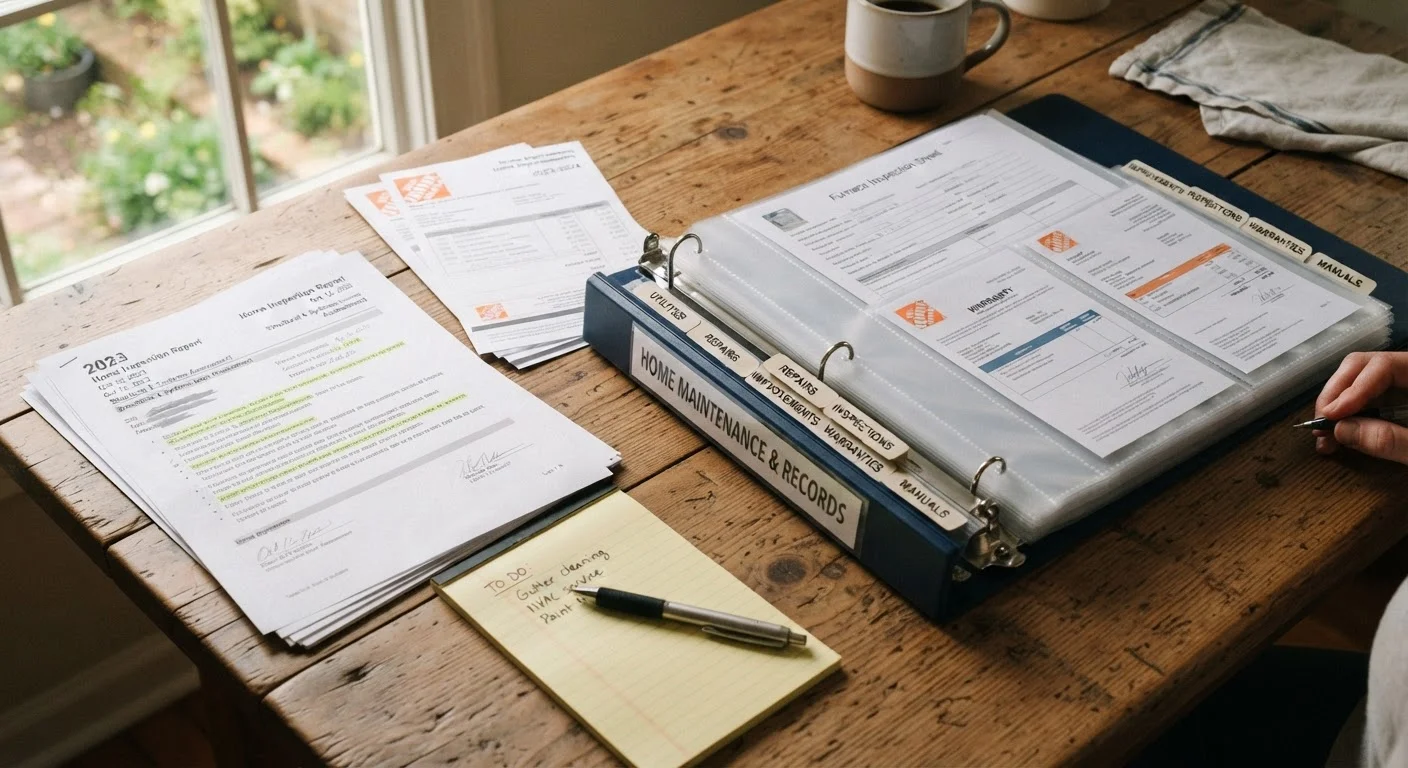
Keep all receipts, invoices, and warranties in one dedicated location
Scattered documents are nearly as bad as no documents. A single physical binder or a labeled digital folder ensures you can find what you need quickly, especially during a sale, insurance claim, or warranty dispute.
Document DIY repairs with photos and material details
Professionally hired work comes with invoices, but work you do yourself leaves no paper trail unless you create one. Photos taken before, during, and after a repair provide visual proof of condition and craftsmanship, and noting the materials used helps future owners match finishes or understand the repair.
Log the make, model, and installation date of every major appliance and system
This information is essential for ordering replacement parts, registering warranties, and understanding when a system is approaching the end of its expected lifespan. Without it, identifying the right parts or a compatible service technician can take considerably longer.
Note any permits pulled and inspections passed
Permitted work signals to future buyers and insurers that renovations were done to code. Unpermitted work - even when done well - can complicate sales and claims. Recording permit numbers and inspection sign-offs protects you if questions arise later.
If you're new to homeownership and want to understand which systems need the most attention, this plain-language introduction to home maintenance is a helpful starting point.
Getting Started: Quick Actions You Can Take Today
The biggest obstacle to good record-keeping is usually just starting. Many homeowners assume they need a polished system before they begin, but a simple folder or notes app works fine. The point is to capture information before it disappears.
The same principle of consistent documentation applies beyond the home. Whether you're tracking car maintenance or managing home improvement projects, documented records pay dividends over time.
Keeping Records Current Over Time
Starting a maintenance record is the easy part. Keeping it current takes a small but deliberate habit. The simplest approach is to update your records immediately after any work is done - while the details are fresh and the receipt is in hand. Waiting even a few days makes it easy to lose track of specifics like the contractor's contact information or the exact product or part used.
Digital vs. Physical Records: Both Work
There's no single right format for home maintenance records. A physical binder is easy to hand off during a home sale and doesn't rely on software. A digital system - cloud storage, a dedicated app, or even a shared email folder - makes it easier to search and access records remotely. Many homeowners use both: physical originals filed in a binder, with photos or scans backed up digitally. Choose whichever format you'll actually maintain consistently.
Consider doing a brief annual review - perhaps each spring - where you check your records, note any gaps, and plan upcoming maintenance. This also helps you spot recurring issues: if you've had the same plumbing section repaired twice in three years, that pattern is worth investigating further. For specific upkeep tasks like wet-area sealing, grout, caulk, and tile upkeep guidance can help you stay on schedule and know what to document.
Ultimately, maintenance records are a long-term investment in clarity. They reduce guesswork, protect your warranty rights, and give you - and anyone who eventually buys your home - a reliable picture of how the property has been cared for.