

Key Takeaways
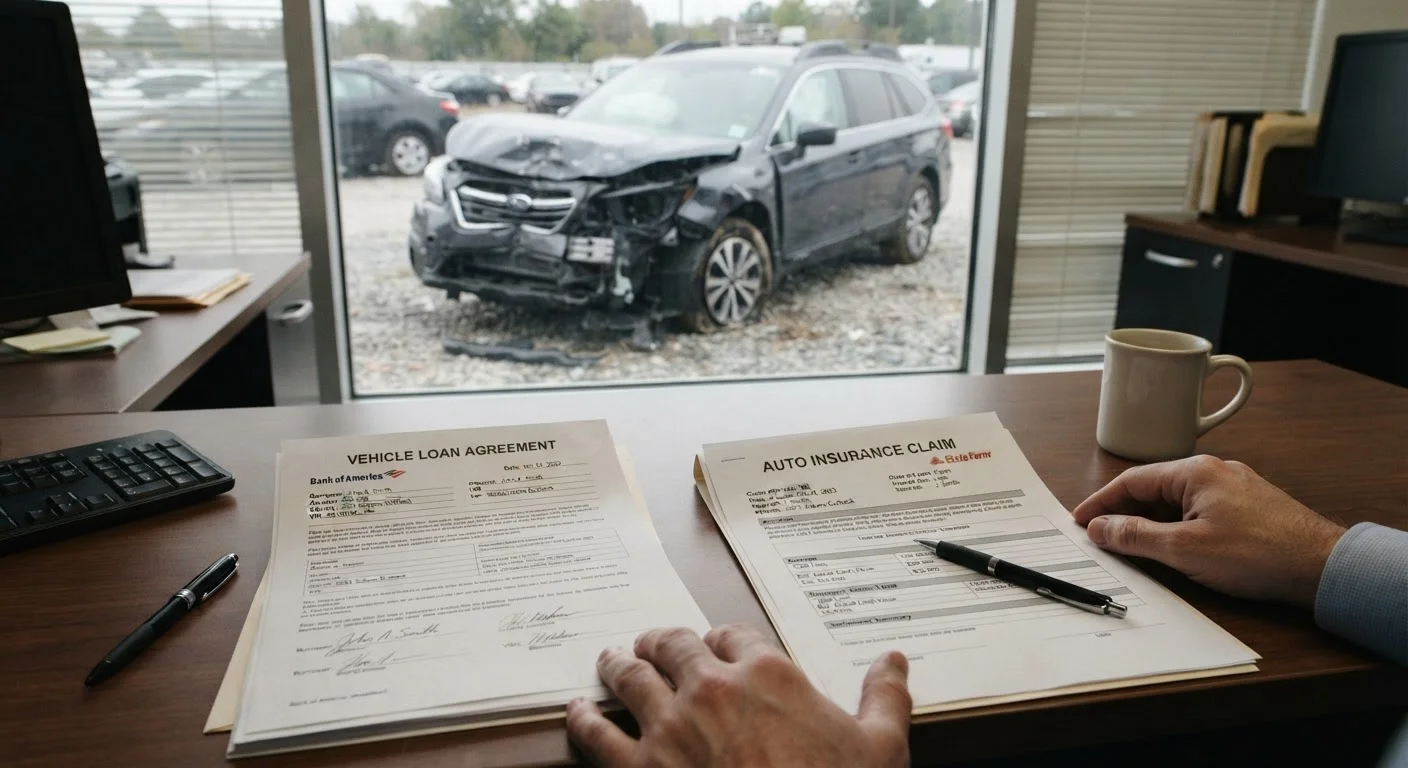
- Gap insurance covers the difference between your loan balance and your car's actual cash value after a total loss.
- New vehicles depreciate quickly - sometimes losing 20% of value within the first year.
- Gap coverage is most valuable when you owe significantly more than the car is currently worth.
- It typically isn't necessary if you made a large down payment or your loan is nearly paid off.
- Gap insurance can be purchased through an insurer or a lender, and costs vary meaningfully between sources.
Covers financial shortfall after a total loss
If your car is totaled and you owe more than its depreciated value, gap insurance pays the difference so you aren't left making loan payments on a car you no longer have.
Protects against rapid early depreciation
New vehicles can lose a substantial portion of their value within the first one to two years, a period when loan balances remain high and the gap between ACV and debt is widest.
Relatively low annual cost when purchased wisely
When added through an auto insurer rather than a dealership finance office, gap coverage typically costs a modest annual premium - often a fraction of what a dealership adds to a loan.
Often required or strongly advisable on leases
Most lease agreements require gap-type protection because lessees don't build equity in the vehicle; many lease contracts include it by default, though it's worth verifying.
Peace of mind during the vulnerable early loan period
The coverage is most valuable in the first two to three years of a loan - precisely when financial exposure is highest and a total-loss event would otherwise leave the largest unpaid balance.
Unnecessary once you build sufficient equity
Once your loan balance drops below your vehicle's current market value, gap coverage no longer serves a function. Continuing to pay for it at that point is an unnecessary expense.
Dealership gap products can be significantly overpriced
Finance offices at dealerships frequently mark up gap insurance substantially. The same protection is often available through auto insurers at a considerably lower cost.
Doesn't cover all out-of-pocket costs
Gap insurance typically doesn't cover your deductible, past-due payments, penalties, or any amount rolled in from a previous loan. Policyholders sometimes discover these exclusions only at claim time.
Not useful without comprehensive and collision coverage
Gap insurance only activates when a primary insurer pays an ACV settlement, which requires comprehensive or collision coverage. It provides no benefit on a minimum-coverage policy.
Redundant if you made a substantial down payment
A down payment of 20% or more typically keeps a buyer above water from the start, making gap coverage an added cost with a very low probability of ever being claimed.
Our Verdict
Gap insurance fills a real financial hole for drivers who are underwater on their auto loans - particularly those who financed with little money down, chose a long loan term, or are leasing. For drivers with significant equity in their vehicle or loans nearly paid off, the added cost is unlikely to pay off. Like most insurance decisions, the value depends entirely on your individual financial position.
Gap insurance is best suited for drivers who financed more than 80% of a vehicle's purchase price, are on a loan term of 60 months or longer, or are leasing - situations where depreciation commonly outpaces loan paydown.
What Gap Insurance Actually Does
Gap insurance - short for Guaranteed Asset Protection - is a supplemental auto coverage designed to address one specific scenario: your vehicle is declared a total loss, but your loan or lease balance is higher than what your insurer pays out.
Standard comprehensive and collision coverage pays the actual cash value (ACV) of your vehicle at the time of the loss - meaning its depreciated market value, not what you paid or what you still owe. If you financed $35,000 but the car's ACV is $27,000 at the time of the accident, your primary insurer pays $27,000. The remaining $8,000 is still your debt - and that's where gap coverage steps in.
This is a narrow but consequential coverage type. It doesn't pay for repairs, doesn't cover liability to others, and doesn't apply when your car is damaged but not totaled. To understand how it fits within a broader policy structure, see how car insurance is structured.
The Pros of Gap Insurance
For drivers in the right financial situation, gap coverage addresses a genuine and often overlooked risk.
Covers financial shortfall after a total loss
If your car is totaled and you owe more than its depreciated value, gap insurance pays the difference so you aren't left making loan payments on a car you no longer have.
Protects against rapid early depreciation
New vehicles can lose a substantial portion of their value within the first one to two years, a period when loan balances remain high and the gap between ACV and debt is widest.
Relatively low annual cost when purchased wisely
When added through an auto insurer rather than a dealership finance office, gap coverage typically costs a modest annual premium - often a fraction of what a dealership adds to a loan.
Often required or strongly advisable on leases
Most lease agreements require gap-type protection because lessees don't build equity in the vehicle; many lease contracts include it by default, though it's worth verifying.
Peace of mind during the vulnerable early loan period
The coverage is most valuable in the first two to three years of a loan - precisely when financial exposure is highest and a total-loss event would otherwise leave the largest unpaid balance.
~20%
Typical first-year vehicle depreciation
Industry data consistently shows new vehicles lose roughly 15-20% of their value in the first year of ownership, according to automotive valuation analysts.
~38%
Share of new-car buyers with negative equity
Automotive industry research has found that a significant share of new-vehicle trade-ins carry negative equity, reflecting how common being underwater on a car loan has become.
Many drivers are unaware that standard insurance doesn't cover negative equity. As explained in our overview of common car insurance misunderstandings, this is one of the most costly surprises at claim time.
The Cons of Gap Insurance
Gap insurance isn't a universal necessity, and paying for it when you don't need it is simply wasted premium.
Unnecessary once you build sufficient equity
Once your loan balance drops below your vehicle's current market value, gap coverage no longer serves a function. Continuing to pay for it at that point is an unnecessary expense.
Dealership gap products can be significantly overpriced
Finance offices at dealerships frequently mark up gap insurance substantially. The same protection is often available through auto insurers at a considerably lower cost.
Doesn't cover all out-of-pocket costs
Gap insurance typically doesn't cover your deductible, past-due payments, penalties, or any amount rolled in from a previous loan. Policyholders sometimes discover these exclusions only at claim time.
Not useful without comprehensive and collision coverage
Gap insurance only activates when a primary insurer pays an ACV settlement, which requires comprehensive or collision coverage. It provides no benefit on a minimum-coverage policy.
Redundant if you made a substantial down payment
A down payment of 20% or more typically keeps a buyer above water from the start, making gap coverage an added cost with a very low probability of ever being claimed.
It's worth cross-referencing gap coverage against other potential shortfalls in your policy. Our article on coverage gaps drivers discover too late covers related blind spots worth reviewing before a loss occurs.
When the Math Works - and When It Doesn't
Whether gap insurance makes financial sense comes down to one core calculation: how much do you owe versus how much is the car worth? If your loan balance is higher than the vehicle's current market value, you are said to be underwater or to have negative equity.
Negative equity is most common in these scenarios:
- Low or no down payment: A small down payment means you start with little equity and depreciation quickly overtakes it.
- Long loan terms: Loans stretched over 72 or 84 months build equity slowly, while depreciation moves faster early on.
- High-depreciation vehicles: Some vehicles lose value faster than average, widening the gap sooner.
- Rolled-over negative equity: If you traded in a car with an outstanding balance and folded it into a new loan, you likely started underwater immediately.
Conversely, gap insurance offers little value if you put down 20% or more, are more than halfway through a standard 48- or 60-month loan, or if you paid cash or financed a small portion of the purchase. Understanding how deductibles and coverage limits interact is also part of this calculation - see how deductibles affect your out-of-pocket costs.
Where to Purchase Gap Insurance
Gap insurance is available through auto insurers, dealership finance offices, and some banks or credit unions. Prices vary significantly by source. Adding it through your existing auto insurer is generally the most cost-effective route, and it can often be cancelled once your loan balance falls below the vehicle's market value. Always review the specific terms, exclusions, and cancellation policy before purchasing.